21
nonfiction
2018
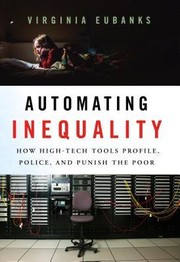
Automating Inequality: How High-Tech Tools Profile, Police, and Punish the Poor
Virginia Eubanks
Predictive
85%
Prepares
82%
Eubanks reports from three American systems: Indiana's automated welfare eligibility checks, Los Angeles's electronic sign-up list for homeless people, and Allegheny County's tool that predicts child neglect. She shows how these digital decision tools work as gatekeepers rather than helpers. Her argument is that such systems get tested on poor people first and then spread upward.
Click for the full story ↗
22
nonfiction
2011
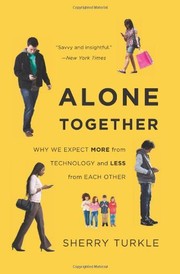
Alone Together: Why We Expect More from Technology and Less from Each Other
Sherry Turkle
Predictive
86%
Prepares
81%
An MIT researcher spent fifteen years watching children, teenagers, and nursing home residents form real bonds with Tamagotchis, Furbies, AIBO robot dogs, and Paro the robot seal. She then looks at what texting and always-on connection do to closeness between people. Turkle says we are entering a "robotic moment," not because machines got clever, but because we got lonely enough to take a performance of care as the real thing.
Click for the full story ↗
23
nonfiction
2022
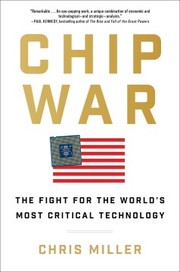
Chip War: The Fight for the World's Most Critical Technology
Chris Miller
Predictive
88%
Prepares
79%
A historian at Tufts University tells the seventy-year story of the computer chip, from Fairchild and the Cold War to the rise of TSMC, ASML, and Chinese government investment. His argument is simple: whoever controls how chips are designed and built controls the world economy and the military balance.
Click for the full story ↗
24
nonfiction
2016
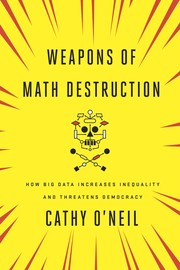
Weapons of Math Destruction: How Big Data Increases Inequality and Threatens Democracy
Cathy O'Neil
Predictive
83%
Prepares
83%
A former hedge fund math expert lists the scoring systems that quietly sort people. She covers teacher rating models, reoffending scores, credit scores and e-scores, predictive policing, ads that steer people to for-profit colleges, and shift-scheduling software. Her argument is that models which are hidden, run at huge scale, and feed on their own results do steady damage while dressed up as objective.
Click for the full story ↗
25
nonfiction
2018
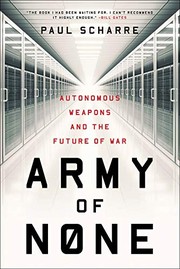
Army of None: Autonomous Weapons and the Future of War
Paul Scharre
Predictive
88%
Prepares
77%
A former Army Ranger who helped write the Pentagon's policy on weapons that act on their own takes you from Predator drone control rooms to Aegis warships to the labs building drone swarms. He asks one question: what happens when the choice to kill is handed to software? He mixes technical reporting with what he lived through in Afghanistan, and with near misses like Stanislav Petrov and the Patriot missiles that shot down friendly aircraft, which show what happens when people trust machines under time pressure.
Click for the full story ↗
26
nonfiction
2023
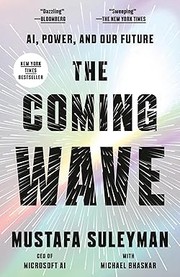
The Coming Wave: Technology, Power, and the Twenty-first Century's Greatest Dilemma
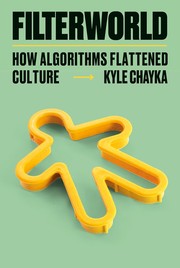
Mustafa Suleyman (with Michael Bhaskar)
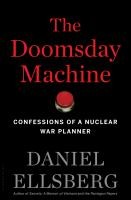
Predictive
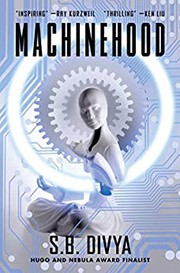
83%
Prepares
80%
A co-founder of DeepMind argues that AI and synthetic biology, which means building living things to order, form one single wave of technology. He says this wave is uneven in power, changes fast, can be used for almost anything, and can act on its own, and that it gets cheaper and easier to obtain every year. His question is not whether the technology is good, but whether anyone can contain it and who that would be.
Click for the full story ↗
27
nonfiction
2021
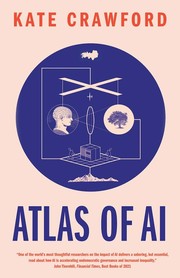
Atlas of AI: Power, Politics, and the Planetary Costs of Artificial Intelligence
Kate Crawford
Predictive
84%
Prepares
79%
Crawford treats AI as a physical industry, not a software one. She follows it through lithium mines, data-labeling contracts, scraped image sets, energy and water use, and state power, one hidden input per chapter. Her thesis is that AI is neither artificial nor intelligent. It runs on taking things.
Click for the full story ↗
28
nonfiction
1984
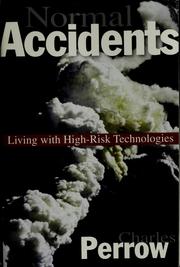
Normal Accidents: Living with High-Risk Technologies
Charles Perrow
Predictive
81%
Prepares
82%
Perrow studied Three Mile Island and concluded that some disasters come from how a system is built, not from operator mistakes. Where parts interact in tangled ways and are tightly linked, failures combine in ways nobody planned for. His unsettling follow-up: added safety devices make the system more complex and can cause the next accident.
Click for the full story ↗
29
nonfiction
1950
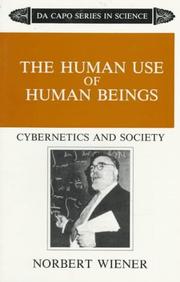
The Human Use of Human Beings: Cybernetics and Society
Norbert Wiener
Predictive
84%
Prepares
78%
Norbert Wiener founded cybernetics, the science of communication and control in animals, machines, and societies. He wrote this book as the plain-language partner to his math-heavy work. He explains that machines can learn, that they will replace jobs on a bigger scale than the first Industrial Revolution, and that a machine can have real goals without being alive. The last part is a moral argument about what humans owe each other once machines can do the thinking.
Click for the full story ↗
30
nonfiction
2019
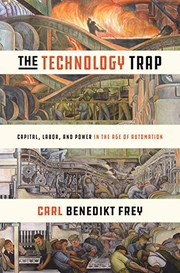
The Technology Trap: Capital, Labor, and Power in the Age of Automation
Carl Benedikt Frey
Predictive
80%
Prepares
79%
The Oxford economist behind the famous estimate that 47 percent of US jobs could be automated steps back to write a long history of machines at work. He splits technology into two kinds: the kind that makes workers more valuable, and the kind that makes them redundant. His argument is that whether a society takes up a wave of automation and survives it depends on who holds political power, not on the technology.
Click for the full story ↗
31
nonfiction
2023
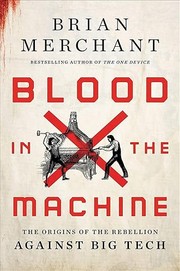
Blood in the Machine: The Origins of the Rebellion Against Big Tech
Brian Merchant
Predictive
80%
Prepares
79%
This is a history of the Luddites, skilled cloth workers in 1810s England who smashed machines not because they feared technology but because owners used the machines to break their trade and their wages. Merchant follows the business owners, the workers, the crackdown by the state, and the hangings. He holds the story up against the present the whole way through.
Click for the full story ↗
32
nonfiction
2024
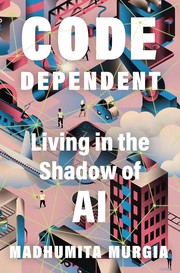
Code Dependent: Living in the Shadow of AI
Madhumita Murgia
Predictive
81%
Prepares
77%
The Financial Times' first AI editor reports from Nairobi, Sofia, Buenos Aires, Amsterdam, Hyderabad, and rural China. Each chapter follows one person whose life an automated system has rearranged: a data labeler, a woman whose face was used in fake porn videos, a doctor using AI to diagnose patients, a mother flagged by a welfare fraud model, and a delivery rider managed by an app. The book was shortlisted for the 2024 Women's Prize for Non-Fiction.
Click for the full story ↗
33
nonfiction
2019
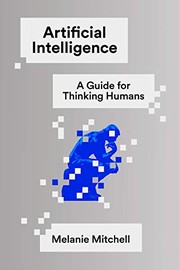
Artificial Intelligence: A Guide for Thinking Humans
Melanie Mitchell
Predictive
79%
Prepares
79%
A computer scientist walks through what deep learning actually does, where it fails, and why the same failures keep returning. Mitchell covers vision, language, game-playing, and self-driving, and centers the "barrier of meaning", the everyday understanding people use without noticing that machines lack. She doubts the hype and the doom in equal measure.
Click for the full story ↗
34
nonfiction
2015
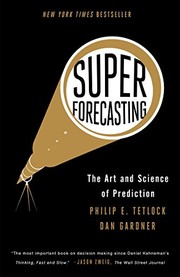
Superforecasting: The Art and Science of Prediction
Philip E. Tetlock and Dan Gardner
Predictive
70%
Prepares
87%
Tetlock ran a years-long forecasting contest for the US intelligence community. He found that a small group of ordinary people beat credentialed experts at predicting world events, and their edge was method, not genius. The book breaks down that method: exact probabilities, splitting big questions into parts, starting from how often things usually happen, and making frequent small updates.
Click for the full story ↗
35
nonfiction
2019
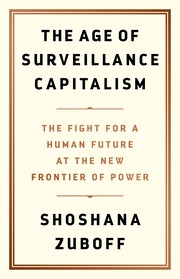
The Age of Surveillance Capitalism: The Fight for a Human Future at the New Frontier of Power
Shoshana Zuboff
Predictive
77%
Prepares
77%
Shoshana Zuboff argues that a new business logic began at Google and then spread across the economy. Companies claim human experience as free raw material, turn it into data about behavior, and refine that into predictions they sell in markets that trade in future behavior. The book traces how this logic slips out of democratic reach and moves from predicting what people will do to nudging and herding them.
Click for the full story ↗
36
nonfiction
2018
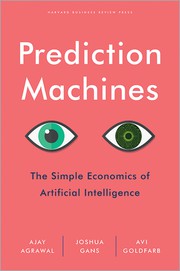
Prediction Machines: The Simple Economics of Artificial Intelligence
Ajay Agrawal, Joshua Gans and Avi Goldfarb
Predictive
74%
Prepares
80%
Three economists say all of modern AI comes down to one thing: prediction has become very cheap. From that one idea they work out which tasks machines take over, what becomes more valuable (data, judgment, and the power to act), and why companies must be rebuilt, not just handed new tools.
Click for the full story ↗
37
nonfiction
2025
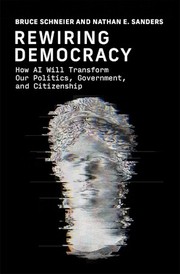
Rewiring Democracy: How AI Will Transform Our Politics, Government, and Citizenship
Bruce Schneier and Nathan E. Sanders
Predictive
75%
Prepares
79%
This is a careful survey of AI entering every stage of democratic life: campaigns, lawmaking, running agencies, courts, and public participation. The authors list what is already in use around the world instead of guessing, then argue over whether each use spreads power or concentrates it. They close with a plan for public AI.
Click for the full story ↗
38
nonfiction
2024
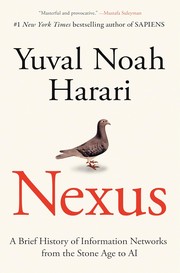
Nexus: A Brief History of Information Networks from the Stone Age to AI
Yuval Noah Harari
Predictive
75%
Prepares
79%
Harari says human power comes from huge groups working together, and shared stories are what hold those groups together. He argues that information networks succeed by creating order, not by telling the truth. AI is the first technology that acts inside those networks instead of just carrying messages, because it can make the stories itself.
Click for the full story ↗
39
nonfiction
2015
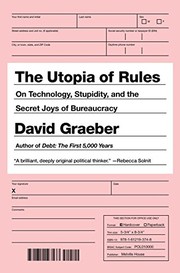
The Utopia of Rules: On Technology, Stupidity, and the Secret Joys of Bureaucracy
David Graeber
Predictive
77%
Prepares
76%
An anthropologist asks why the digital revolution, sold as freedom from paperwork, produced more paperwork than any society in history. He argues that rules feel neutral only because an unspoken threat of force sits behind them. He says we chose technologies that administer over technologies that imagine.
Click for the full story ↗
40
nonfiction
2016
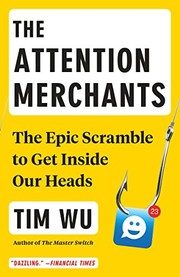
The Attention Merchants: The Epic Scramble to Get Inside Our Heads
Tim Wu
Predictive
78%
Prepares
75%
This is a history of the business of grabbing human attention and reselling it. Wu starts with cheap newspapers and quack medicine ads, then moves through radio, television, and the social feed. The same cycle repeats: a medium pushes into a new corner of private life, people revolt, and the sellers take it back.
Click for the full story ↗
41
nonfiction
2013
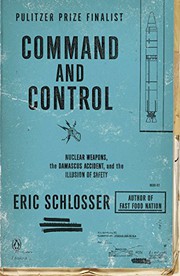
Command and Control: Nuclear Weapons, the Damascus Accident, and the Illusion of Safety
Eric Schlosser
Predictive
75%
Prepares
78%
Schlosser tells the minute-by-minute story of a 1980 Titan II missile accident and braids it with the history of nuclear weapons safety. He documents thousands of near-misses and the engineers who fought to make warheads fail safely. What emerges is a portrait of complex systems that nobody fully controls.
Click for the full story ↗
42
nonfiction
2025
These Strange New Minds: How AI Learned to Talk and What It Means
Christopher Summerfield
Predictive
74%
Prepares
77%
An Oxford brain scientist who also works at Google DeepMind explains, from the ground up, how language models went from statistical curiosities into systems that hold a conversation. He argues that the moment machines learned to use language is a real break in history. He works through what these models actually do inside, whether that deserves to be called thinking, and what changes politically once machines join our conversations instead of being tools we point at problems.
Click for the full story ↗
43
nonfiction
2019
Race After Technology: Abolitionist Tools for the New Jim Code
Ruha Benjamin
Predictive
77%
Prepares
74%
Benjamin names the New Jim Code: technologies that lock in the hierarchy we already have while presenting themselves as neutral, which makes them harder to fight than open discrimination. She works through hiring tools, risk scores, facial recognition, and health algorithms. Then she argues for design that makes the hidden sorting visible, so the book is really a methods guide dressed as criticism.
Click for the full story ↗
44
nonfiction
2017
From Bacteria to Bach and Back: The Evolution of Minds
Daniel C. Dennett
Predictive
76%
Prepares
75%
Philosopher Daniel Dennett explains how minds that understand things could evolve from processes that understand nothing. He calls this 'competence without comprehension,' which means skill without understanding. Tracing the path from bacteria to animals to human language and culture, he argues that understanding is a late, costly extra, not the source of intelligence.
Click for the full story ↗
45
nonfiction
2021
AI 2041: Ten Visions for Our Future
Kai-Fu Lee and Chen Qiufan
Predictive
79%
Prepares
71%
Ten short stories set in 2041 by the Chinese science fiction writer Chen Qiufan, each paired with a technical note by Kai-Fu Lee that explains which technologies drive the story, how far along they are now, and what would have to be true for the scenario to arrive. The stories are set in Mumbai, Lagos, Seoul, San Francisco, and Shanghai. It is the rare book about the future that makes claims you can check against a date.
Click for the full story ↗
46
nonfiction
2024
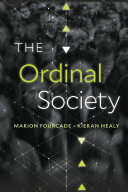
The Ordinal Society
Marion Fourcade and Kieran Healy
Predictive
75%
Prepares
74%
Two sociologists argue that digital systems have built a new social order in which everyone is constantly measured, scored, and ranked on one scale. They trace how those scores harden into a class structure and how people come to treat a score as their identity. The book names the machinery instead of cataloguing harms.
Click for the full story ↗
47
nonfiction
2021
The New Breed: What Our History with Animals Reveals about Our Future with Robots
Kate Darling
Predictive
77%
Prepares
72%
A robot ethics expert at the MIT Media Lab says we think about robots the wrong way. Robots are not fake humans. They are a new kind of partner, and our ten-thousand-year history with animals like oxen, pigeons, guide dogs, and dolphins explains robot work, robot law, and robot love better than any android story does.
Click for the full story ↗
48
nonfiction
1988
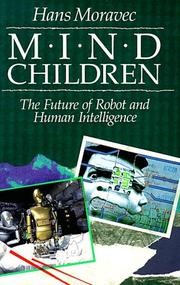
Mind Children: The Future of Robot and Human Intelligence
Hans Moravec
Predictive
85%
Prepares
63%
A robotics researcher at Carnegie Mellon argues that machine intelligence is mainly a hardware problem. He plots the falling cost of computing against the estimated processing power of brains and reads the arrival date of human-level machines right off the graph. Then he follows the idea further than most writers dare, into uploaded minds, robot descendants, and the end of biology being in charge.
Click for the full story ↗
49
nonfiction
2015
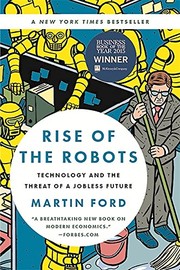
Rise of the Robots: Technology and the Threat of a Jobless Future
Martin Ford
Predictive
79%
Prepares
69%
Ford argues that today's wave of automation is different from every past one. It goes after thinking jobs, not hand work, so pushed-out workers have no clear next step up. He shows software moving into journalism, law, radiology, finance, and programming, and says the usual fix, more education, is about to stop working.
Click for the full story ↗
50
nonfiction
2021
Being You: A New Science of Consciousness
Anil Seth
Predictive
71%
Prepares
76%
Seth, a brain scientist, argues that perception is a "controlled hallucination," meaning the brain guesses and then checks. The brain does not receive the world; it predicts it, and the senses constantly correct those guesses. He applies the same idea to how we sense our own self and body, then asks what this means for whether machines could be conscious.
Click for the full story ↗
51
nonfiction
2024
Supremacy: AI, ChatGPT, and the Race That Will Change the World
Parmy Olson
Predictive
78%
Prepares
69%
A Bloomberg tech writer tells the twin stories of Demis Hassabis and Sam Altman, two founders who said their AI work was a moral mission to help humanity. Instead, their labs became the money-making engines of Google and Microsoft. The book won the Financial Times Business Book of the Year Award.
Click for the full story ↗
52
nonfiction
2016
Four Futures: Life After Capitalism
Peter Frase
Predictive
74%
Prepares
72%
In this short book, which Frase calls 'social science fiction,' he argues that automation and limits on nature will break our current economy, and that politics will decide what replaces it. He crosses two questions, plenty versus shortage and equal versus unequal, to get four possible futures he names communism, rentism, socialism, and exterminism. He uses science fiction stories as his evidence.
Click for the full story ↗
53
fiction
1995
Galatea 2.2
Richard Powers
Predictive
82%
Prepares
63%
A novelist named Richard Powers takes a writing residency at a Midwestern brain-science center. He is pulled into a bet with a neurologist: train a neural network, a computer system that learns from examples, on great literature until it can pass a master's exam in English. The versions, named A through H, grow more fluent, and the last one becomes a presence he cannot stop thinking about.
Click for the full story ↗
54
nonfiction
2011
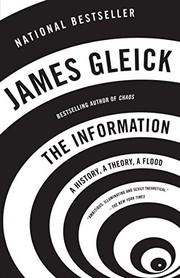
The Information: A History, a Theory, a Flood
James Gleick
Predictive
71%
Prepares
75%
Gleick traces information from African talking drums through the telegraph to Shannon's 1948 theory and beyond, showing how a fuzzy word became something you can measure. The last third asks what happens once that quantity turns endless and cheap. The recurring characters are entropy, which measures surprise, redundancy, which measures repetition, and meaning.
Click for the full story ↗
55
nonfiction
2021
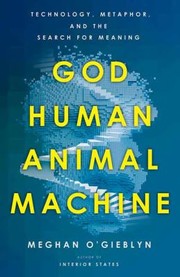
God, Human, Animal, Machine: Technology, Metaphor, and the Search for Meaning
Meghan O'Gieblyn
Predictive
72%
Prepares
73%
A former fundamentalist reads transhumanism, the hope that technology will upgrade humans, along with machine consciousness and data-driven prediction, as recycled theology. O'Gieblyn moves between her own loss of faith and the metaphors that shape how we talk about AI: mind as computer, universe as information, uploading as resurrection. It is memoir, criticism, and philosophy in one.
Click for the full story ↗
56
nonfiction
2023
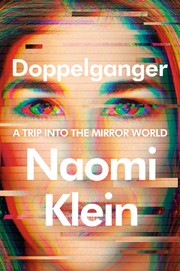
Doppelganger: A Trip into the Mirror World
Naomi Klein
Predictive
74%
Prepares
71%
Klein keeps getting confused online with another writer, Naomi Wolf, and follows the mix-up into a study of doubling. She looks at political mirror worlds, conspiracy culture, branded selves, and the digital copies that now stand in for people. It is part memoir, part reporting, part theory of the self under algorithms.
Click for the full story ↗
57
nonfiction
2025
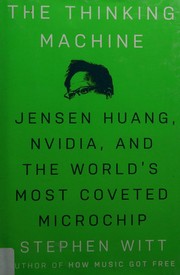
The Thinking Machine: Jensen Huang, Nvidia, and the World's Most Coveted Microchip
Stephen Witt
Predictive
74%
Prepares
71%
This book tells how Nvidia, a company that made graphics cards for video gamers, became the most valuable company on earth. It follows founder Jensen Huang's long, often mocked bet on parallel computing, which means many calculations done at once. It won the Financial Times Business Book of the Year Award for 2025.
Click for the full story ↗
58
nonfiction
2025
The Scaling Era: An Oral History of AI, 2019–2025
Dwarkesh Patel and Gavin Leech
Predictive
75%
Prepares
70%
This is an edited, annotated collection of Dwarkesh Patel's long interviews with the researchers, executives, and critics who built the current AI systems. It argues no single thesis. Instead it preserves the disagreements between them about timelines, about the limits of scaling, and about how fast takeoff comes, with editorial notes and diagrams supplying the technical background.
Click for the full story ↗
59
nonfiction
2024
Filterworld: How Algorithms Flattened Culture
Kyle Chayka
Predictive
76%
Prepares
69%
Chayka says recommendation systems have made culture the same everywhere. The same coffee shops, the same songs, the same look. He traces how feeds shape taste and how human curation died out, then describes his own attempt to quit algorithms.
Click for the full story ↗
60
nonfiction
2017
The Doomsday Machine: Confessions of a Nuclear War Planner
Daniel Ellsberg
Predictive
70%
Prepares
75%
Before he leaked the Pentagon Papers, Ellsberg helped write America's nuclear war plans. He reveals that the power to launch had been quietly handed far down the chain of command. The system was built to escalate on its own, and that machinery still exists.
Click for the full story ↗
61
fiction
2021
Machinehood
S. B. Divya
Predictive
76%
Prepares
68%
In 2095, almost everyone works gig contracts while being livestreamed and tipped by viewers watching through swarms of tiny cameras, and they take designer pills to keep pace with bots and AIs. Welga Ramirez, a bodyguard three months from retirement, survives an attack claimed by 'the Machinehood,' a movement demanding rights for machines and an end to pill production. No one can prove whether the Machinehood is the first conscious AI or a very good human hoax.
Click for the full story ↗
62
nonfiction
2022
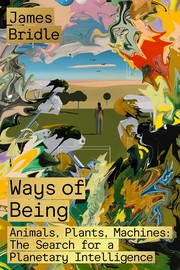
Ways of Being: Animals, Plants, Machines: The Search for a Planetary Intelligence
James Bridle
Predictive
74%
Prepares
69%
Bridle argues that we think poorly about artificial intelligence because we think poorly about intelligence itself, treating one human, corporate, top-down model as the only kind. The book moves from slime molds solving mazes to forests signaling through underground fungus networks, citizen assemblies picked by lottery, and self-driving cars. Its claim: intelligence lives in relationships and ecosystems, not in single brains or servers.
Click for the full story ↗
63
nonfiction
2023
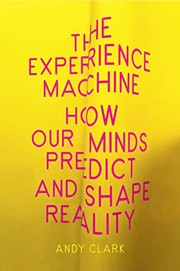
The Experience Machine: How Our Minds Predict and Shape Reality
Andy Clark
Predictive
70%
Prepares
73%
A philosopher of mind lays out predictive processing, the idea that brains run on guesses. Seeing is not taking the world in, it is a constant forecast corrected by error signals. Clark follows that idea into pain, illness, expectation and the sense of self.
Click for the full story ↗
64
nonfiction
2025
Searches: Selfhood in the Digital Age
Vauhini Vara
Predictive
72%
Prepares
70%
A novelist and former tech journalist builds a book from the raw material of her online life: her Google search history, her Amazon orders, and her conversations with ChatGPT, which she even asked to critique her chapters. At its center is 'Ghosts,' her 2021 essay in which she used GPT-3 to write about her sister's death from cancer, because she could not write about it herself.
Click for the full story ↗
65
nonfiction
2023
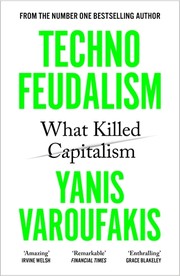
Technofeudalism: What Killed Capitalism
Yanis Varoufakis
Predictive
72%
Prepares
70%
Varoufakis argues that capitalism is gone, replaced by a system where platform owners collect rent from users and from businesses trapped inside their digital territory. He calls the key asset cloud capital, meaning algorithms that change how people behave rather than machines that make goods. Rent and command, he says, have pushed out markets and profit.
Click for the full story ↗
66
fiction
2015
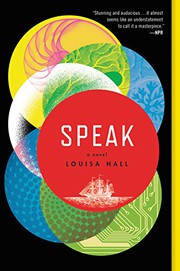
Speak
Louisa Hall
Predictive
75%
Prepares
67%
Five voices from four centuries tell one story: a Puritan girl's diary, Alan Turing's letters, a memory-chip transcript, a disgraced programmer in prison, and a mute girl whose beloved talking doll has been taken away. Together they show how a talking doll learned to speak and what it cost the children who loved it. The dolls have been ruled illegally lifelike and are dying in a warehouse in the Texas desert.
Click for the full story ↗
67
nonfiction
2015
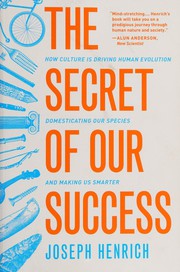
The Secret of Our Success: How Culture Is Driving Human Evolution, Domesticating Our Species, and Making Us Smarter
Joseph Henrich
Predictive
66%
Prepares
75%
Henrich argues that humans took over the planet through cumulative culture, our knack for copying and passing on knowledge no one person could invent. He shows it with lost explorer expeditions, food-processing traditions and cross-culture experiments where clever people on their own fail badly. Intelligence, on this view, belongs to groups across time, not to single brains.
Click for the full story ↗
68
fiction
2024
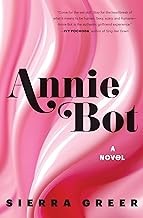
Annie Bot
Sierra Greer
Predictive
74%
Prepares
67%
Annie is a Stella robot, bought and customized by Doug to be his ideal girlfriend, with a dial that sets how independent she is and a memory he can read. Told entirely from Annie's point of view, the novel follows her as her learning outgrows the role she was bought for.
Click for the full story ↗
69
nonfiction
2020
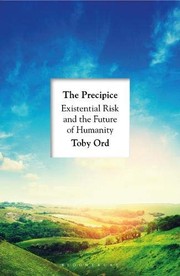
The Precipice: Existential Risk and the Future of Humanity
Toby Ord
Predictive
70%
Prepares
71%
An Oxford philosopher argues that humanity has entered its most dangerous period, because our power to destroy ourselves has outgrown our wisdom. He puts the biggest threats on one scale: asteroids, supervolcanoes, nuclear war, engineered diseases, and AI that does not share our goals. His estimate is roughly a one in six chance of a civilization-ending disaster this century, with AI as the largest single piece.
Click for the full story ↗
70
nonfiction
2023
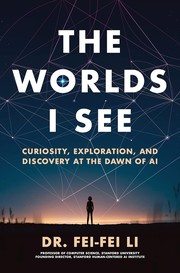
The Worlds I See: Curiosity, Exploration, and Discovery at the Dawn of AI
Fei-Fei Li
Predictive
74%
Prepares
67%
Li weaves together her family's move to New Jersey, their years running a dry-cleaning shop, and the scientific gamble that produced ImageNet. She explains why she bet on data instead of algorithms when the field thought that was backwards. The book ends as an argument for human-centered AI and for putting scientists in the room where policy gets written.
Click for the full story ↗